Giro Games
 The Machine That Was Never Called a Slot: Naming Gambling Around the World
The English name is oddly neutral. A “slot machine” is described by its coin slot — a piece of hardware. Nearly every other language went for something with an opinion, and the resulting map of names is one of the most revealing artefacts in gambling culture.
The machine as a thief
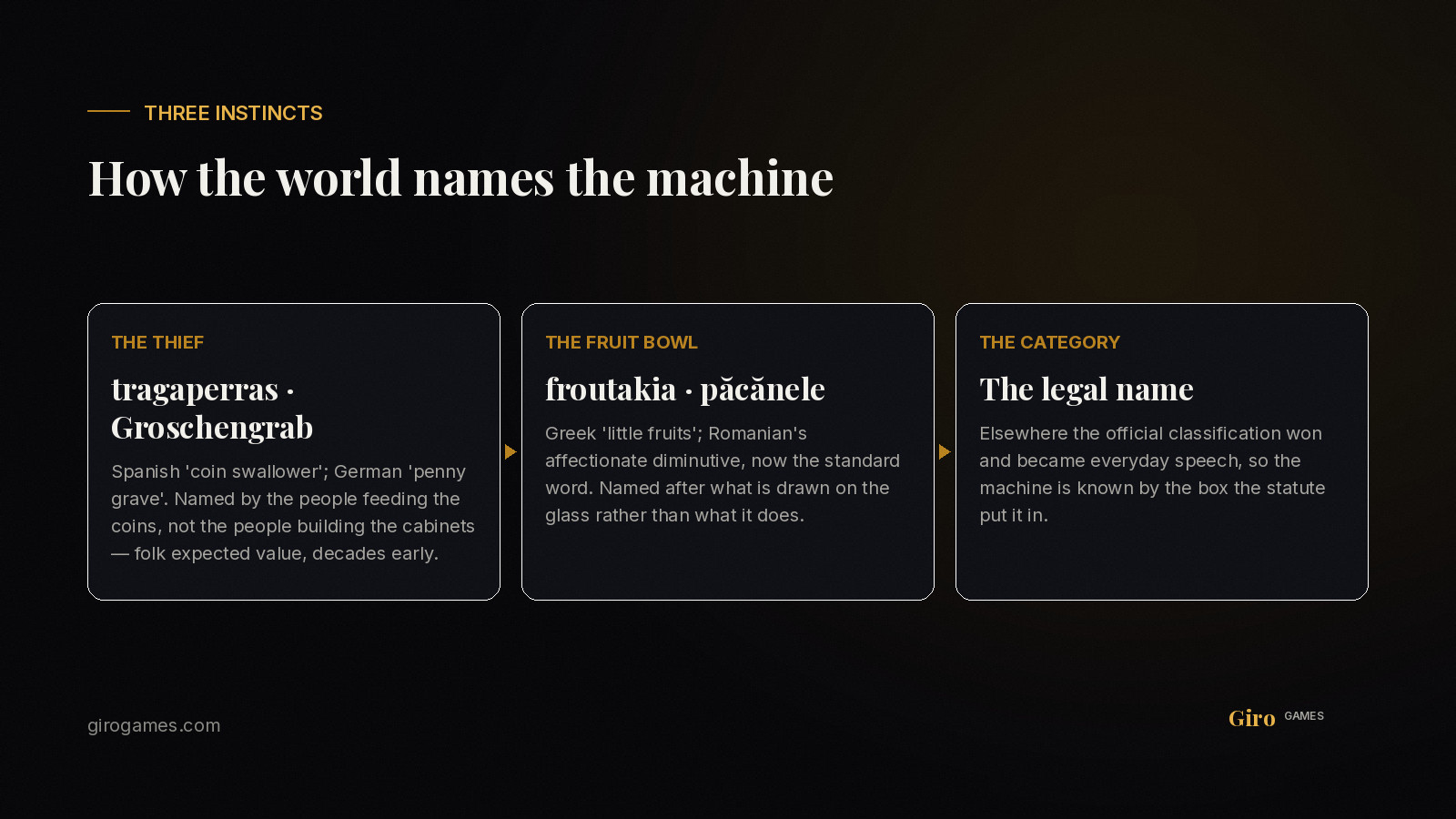
Spanish calls it the tragaperras — the coin swallower, from tragar (to swallow) and perras (old slang for small coins). German offers Groschengrab, the penny grave: a hole in the ground where your small change is buried. The English-speaking world’s own contribution to this family is the one-armed bandit, which Sweden translated almost literally into enarmad bandit.
Three languages, three metaphors, one shared verdict: the machine takes. These names were coined by the people feeding the coins, not by the people building the cabinets, and they encode a folk understanding of expected value long before anyone published an RTP figure.
The machine as a fruit bowl
Then there is the opposite instinct — naming the machine after what is drawn on it. Greek players say φρουτάκια (froutakia), “little fruits.” Romanian says păcănele, an affectionate diminutive that has become the standard word for slots in the country. British English gave the world the fruit machine for the same reason: cherries, lemons, plums and bells were the symbol set that survived from the earliest reel games.
These names are warm rather than accusatory. The diminutive is doing real work: little fruits, little tiger — a grammatical shrug that makes the machine sound harmless and familiar. Brazil’s tigrinho follows exactly the same instinct, applied to one specific modern game.
The machine as an official category
A third family avoids metaphor entirely and adopts the legal term. Dutch says gokkast (gambling cabinet) but its regulator says kansspelautomaat — chance-game automat. Germany’s legal term is Geldspielgerät, money-play device. Italy speaks of the apparecchio da intrattenimento, entertainment apparatus, with players preferring the imported slot or the older newslot.
Where the bureaucratic name wins out in everyday speech, it usually signals a market that was regulated before it was popularised — the machine arrived already classified.
What the map shows
Line the families up and a pattern appears. Countries whose machine culture grew in bars and cafés produced affectionate or accusatory folk names. Countries whose machine culture was created by legislation kept the legal noun. And the accusatory names cluster where machines arrived early, spread fast, and were widely resented — the vocabulary of a public that felt the machine before it understood it.
There is a lesson in that for anyone who builds these games: players name things according to how they feel about them, and no amount of marketing outruns a folk name. “Penny grave” was not chosen by a manufacturer.
Our own naming problem
Every studio faces a small version of this. When Giro Games names a title — Midas Golden Era for a golden-touch mythology slot — the name has to survive contact with players who will shorten it, nickname it and use it in ways nobody planned. The global map of slot vocabulary suggests they always win that negotiation.
Sources: Groschengrab, Netzverb (German); Φρουτάκια — ιστορικά στοιχεία (Greek); Istoria păcănelelor (Romanian).
18+. Play responsibly.