Giro Games
Stake asked us to rename Zeus Storm Era: the words a game title can no longer use
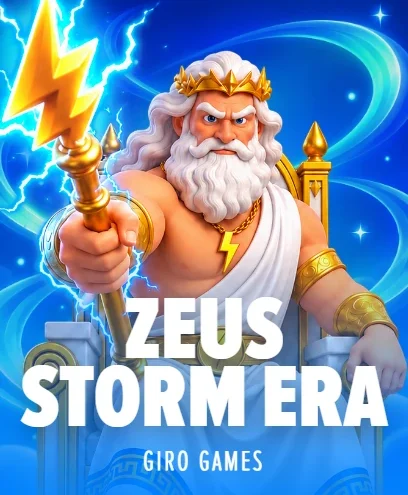
During the pre-release review of Zeus Storm Era we received a letter from Stake’s review team. The game itself was not the subject. The title was. We are publishing the text because it says something useful about where the platform is heading, and because it changes the name of a game we have been announcing for months.
What the letter says
In current game title, the word “Zeus” is prohibited. For more clarity the prohibited words are: Gates of…, Bonanza, Olympus, Bass, Zeus, Hades, 1000, Megaways, xWays, RTP, Enhanced, Boosted, Rush, Kraken, Waylanders.
Please also make sure the new title is unique and does not match or closely resemble any existing game, publisher, or game series already available on Stake.
Please ensure that the game title is altered and that the new title is updated across all game references, including the Game Info, so we can proceed with the review.
So the review of the game is paused until the name changes everywhere it appears: in the build, in the Game Info panel and in every reference we control.
Where the list probably comes from
The letter gives no reasons, so what follows is our reading, not Stake’s explanation. The words fall into three groups.
Names of well-known series. Gates of…, Olympus, Bonanza, Bass and 1000 are the building blocks of some of the most played slots in any lobby: Gates of Olympus, Sweet Bonanza, Big Bass Bonanza and the “1000” versions that followed them. Zeus and Hades are among the most used names in mythology slots. A new game that borrows one of these words sits next to the originals in search results and looks like a relative.
Trademarked mechanics. Megaways is a registered trademark of Big Time Gaming, which licenses the name and the mechanic to other studios. xWays is a proprietary mechanic of Nolimit City, licensed in the same way. A title cannot promise a mechanic that its studio has no licence to use.
Words that sound like platform labels. RTP, Enhanced and Boosted read like a statement about the math or like a badge the platform itself might put on a game. In a title they can mislead a player about what is being offered. Rush, Kraken and Waylanders we cannot place with certainty; the second paragraph of the letter suggests they belong to games or series that already exist on Stake.
The public Stake Engine approval guidelines are shorter than the letter. They say that team names, game titles and assets must follow intellectual property and copyright law, that games must be original, and that approval is at the reviewer’s discretion. They do not contain a list of words. The list we received is how that general rule is applied in practice today.
Why the bar keeps moving
The scale explains most of it. In September 2026 Stake co-founder Ed Craven said the platform, now called Engine, had attracted more than 1,000 publishers and more than 4,000 games in a year, as iGaming Expert reported. With four thousand titles, names collide. Mythology is one of the most crowded shelves, and “Zeus” is one of the most crowded words on it.
The review has tightened step by step. When the platform launched its testing tools in 2025, the trade press wrote about an accelerated approval that could put a game live in 24 hours. Since then Stake Engine has announced that games rated below one star on average are no longer approved, with the approval thread locked for seven days before a resubmission. The title check is the next layer of the same policy.
How hard a three-star release has become
Midas Golden Era and Sugar Space both received the maximum three stars, so we can compare then and now. In our experience the maths is checked first and the front end second, and the gap between two and three stars has always been polish: win presentation, anticipation, load times. That part has not changed. What has changed is everything around it. A game now has to be original in its name as well as in its art and math, and a review can stop on a single word before it reaches anything else.
Other developers describe the same shift less calmly. One wrote on LinkedIn that quality standards have been raised throughout the year and that almost all significant visibility is now reserved for the highest-rated games, and asked why a team with a budget would choose to build there at all. We understand the frustration: for a small team, three stars has moved from a bonus to a condition of being seen. Our view is different. A platform with thousands of games has to choose what it shows, and a bar that rewards original work is one we would rather clear than argue with.
We do not have figures for how many submissions reach three stars, and we will not guess. What we can say is that the preparation for one release now includes work that used to be optional: a search of the Stake lobby for similar names, a check of every word against trademarks, and a second pass over the Game Info text.
What happens to Zeus Storm Era
The game gets a new title. The character, the mechanics, the art and the math model stay exactly as they were built; only the name changes. We will update the game page, the catalogue and the Game Info at the same time and announce the new name here in Studio News. The release date will follow the review rather than the calendar. Midas Golden Era and Satyr Reveal Era, the other titles in our mythology series, are not affected.
For studios preparing their own submission, the short version is this: check the title before you check anything else. How the rest of the process works is described in our guide to how studios build and submit games on Stake Engine.