Giro Games
 The University That Runs on Slot Machines

Iceland is not a country you associate with gambling. There are no private casinos; the law does not provide for them. And yet Iceland has gaming machines — and the single most prominent operator of them is not a gaming company at all. It is the University of Iceland, through its lottery, Happdrætti Háskóla Íslands.
How a university ended up in the machine business
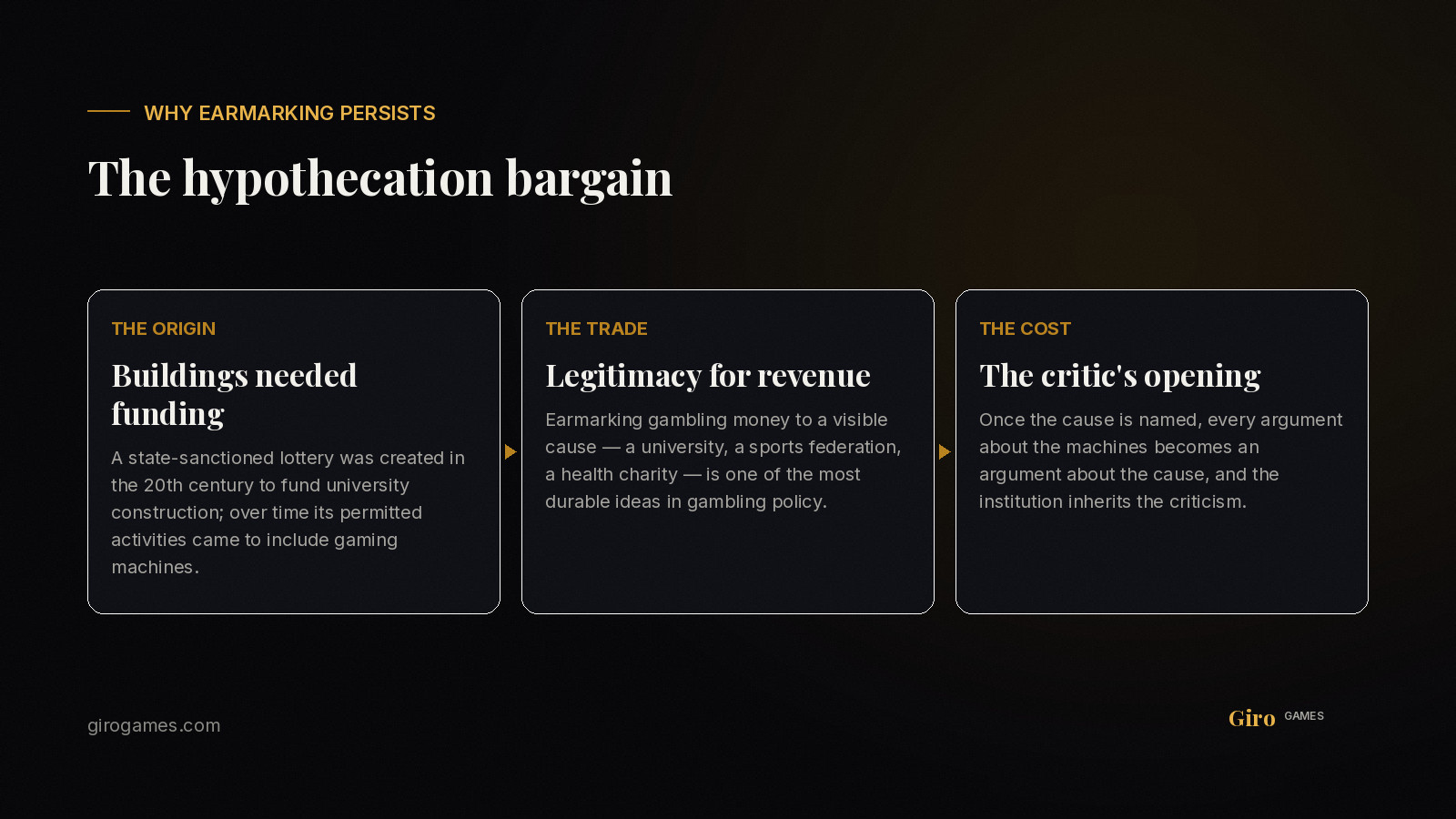
The arrangement dates back to the university’s need for buildings in the 20th century, when a state-sanctioned lottery was created to fund construction. Over time the lottery’s permitted activities came to include gaming machines, and the revenue stream became structural: campus infrastructure financed by devices in Icelandic venues. The university has since contracted modern casino management technology for its machine estate — the sort of central monitoring system that any commercial operator would use.
The result is a small country where the machine market is dominated by beneficiaries most nations would consider incongruous: a university and a set of charitable bodies. Icelandic per-capita gambling figures have surprised observers precisely because the market looks so unlike its reputation.
The unavoidable question
An institution devoted to knowledge, funded by machines whose entire economics rest on the mathematics of losing, is a situation that generates its own criticism — and it has. Icelandic and international coverage has described the university as reliant on machine income, and a later plan to host casino-style activity on campus drew public objection. The tension is real and structural: the better the machines perform, the better the lecture halls are funded.
Iceland is not unique in the underlying bargain. Finland funded sport and culture from machines; Norway funded charities; Sweden funded the state. What makes the Icelandic case sharp is the smallness and specificity — not “the public good” in the abstract, but one named university, with buildings you can walk into.
Why hypothecation keeps reappearing
Earmarking gambling revenue to a visible cause — a university, a sports federation, a health charity — is one of the most durable ideas in gambling policy. It buys legitimacy: the machine is no longer just a machine, it is a funding mechanism with a face. It also creates a constituency that will defend the machines, which is exactly why critics distrust it.
For anyone who works in games, the Icelandic model highlights an uncomfortable truth about the industry’s position in society: the argument about slots is almost never only about the slots. It is about who receives the money and what they promise to do with it.
Our own position
Giro Games is a studio, not an operator — we build original slot games and license them to regulated platforms, and the questions of hypothecation belong to jurisdictions rather than to us. What the Icelandic case does sharpen is why transparency at the product level matters so much: when the wider economics are this entangled, the least a game maker can do is be exact about the one thing fully under its control — the math, published, and honest.
Sources: University of Iceland ‘addicted to slot machine income’, Times Higher Education; Iceland: the unexpected gambling powerhouse of Europe, Yogonet.
18+. Play responsibly.